Iran Trolls Trump with Viral “We Are Bored” Jab – Digital Warfare Goes Mainstream
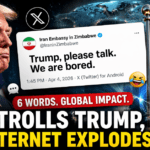
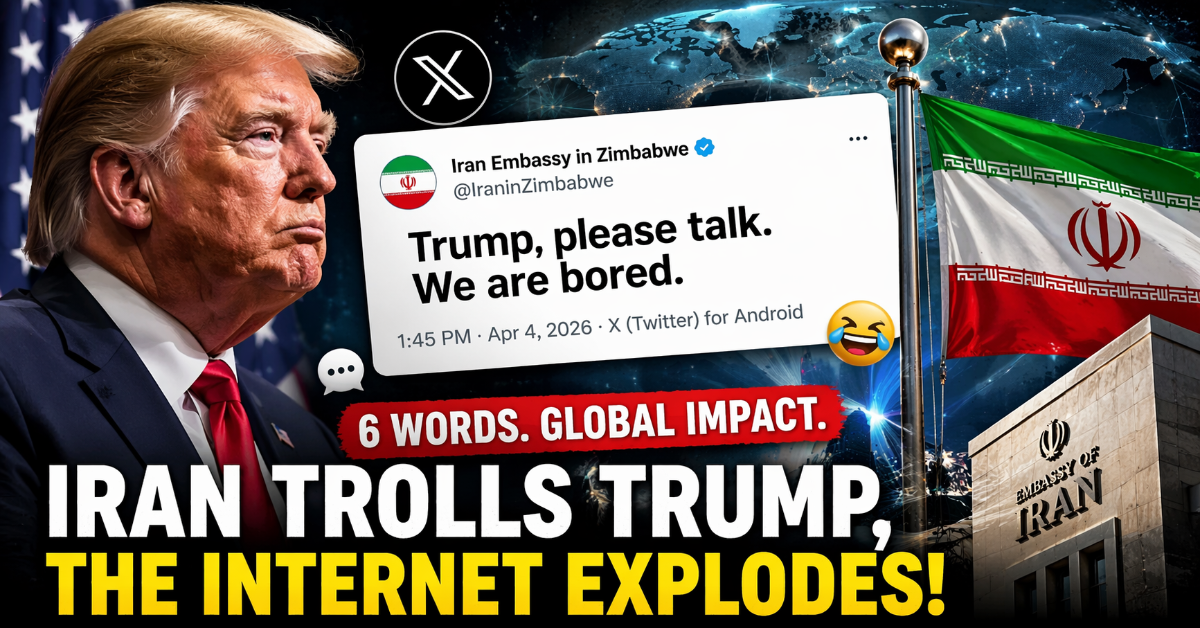
In today’s hyper-connected world, global conflicts are no longer limited to battlefields — they now unfold on social media in real time. This week, Iran trolls Trump with a short, sarcastic message that has captured global attention: “Trump, please talk. We are bored.”
The six-word post, shared by Iran’s embassy in Zimbabwe on April 4, 2026, exploded across X (formerly Twitter). What started as a single tweet has now become a full-scale digital campaign where Iran trolls Trump through humour, memes, and sharp political commentary.
Coordinated Meme Offensive: How Iran Trolls Trump
This wasn’t an isolated incident. Multiple Iranian embassies — from South Africa to Europe, Southeast Asia, and beyond — have joined forces in what observers call a coordinated “meme offensive.” Instead of issuing dry diplomatic statements, these accounts are now actively engaging in ways that make Iran trolls Trump go viral daily.
The Iranian Embassy in South Africa has seen its follower count surge past 100,000 by posting:
- Car memes mocking U.S. policy
- Spoof WhatsApp conversations
- Lego-style animated clips of military scenarios
- Sarcastic replies to American political statements
Other embassies in Nigeria, Tunisia, the UK, Sweden, Thailand, and Geneva have quickly followed suit, turning social media into a new front where Iran trolls Trump with creativity and speed.
Timing of the Campaign: Tensions Rise as Iran Trolls Trump
The timing of this digital push coincides with heightened U.S.-Iran tensions. Recent reports detail military engagements, including the downing of a U.S. F-15E fighter jet over Iranian territory. While both crew members were eventually rescued, the incident has escalated an already volatile situation.
Even amid these serious developments, Iran trolls Trump with a surprisingly lighthearted tone. One post sarcastically thanked Trump for focusing on an “IMPORTANT MATTER” while referencing rising U.S. fuel prices. Another responded to Trump’s statements with dry wit, further amplifying how effectively Iran trolls Trump online.
As of now, Washington has issued no official response to the embassy posts, allowing the online narrative shaped by Iran trolls Trump to spread largely uncontested.
Diplomacy Enters the Internet Age: Why Iran Trolls Trump Matters
This unconventional approach highlights a broader shift in how governments communicate. World leaders and embassies are no longer relying solely on formal channels — they are meeting audiences where they are: on platforms like X.
By blending humor with political messaging, Iran trolls Trump in a way that feels more relatable and shareable than traditional propaganda. The campaign raises key questions:
- Is this a new form of digital propaganda?
- Does humour make geopolitical taunts more impactful?
- Should world leaders respond to — or ignore — this kind of online provocation?
What makes the strategy stand out is how Iran trolls Trump while projecting confidence and calm, even during active conflict.
The Bigger Picture Behind Iran Trolls Trump
While the memes and one-liners appear playful, the context remains deeply serious. Behind the viral content lies a real geopolitical standoff with significant global implications.
This episode demonstrates how a simple six-word tweet can dominate headlines. In 2026, digital influence has become just as powerful as traditional diplomacy — and Iran trolls Trump proves that governments are quickly adapting to this new reality.
As the situation evolves, one thing is certain: in the age of social media, even the smallest jab can spark worldwide debate. The way Iran trolls Trump may signal the future of international relations — where perception, virality, and psychological strategy play central roles.