Trump’s Iran Strike Threat: War Crime Allegations & The Tuesday Deadline
A diplomatic firestorm has ignited following Donald Trump’s recent doubling down on potential military strikes against Iran’s civilian infrastructure. With a critical 8 p.m. ET Tuesday deadline looming, the former president’s rhetoric has shifted the global conversation from standard brinkmanship to a heated debate over international law and the definition of war crimes. This escalating Trump Iran war threat has placed world leaders on high alert.
The “Tuesday Deadline”: A Global Energy Crisis at Stake
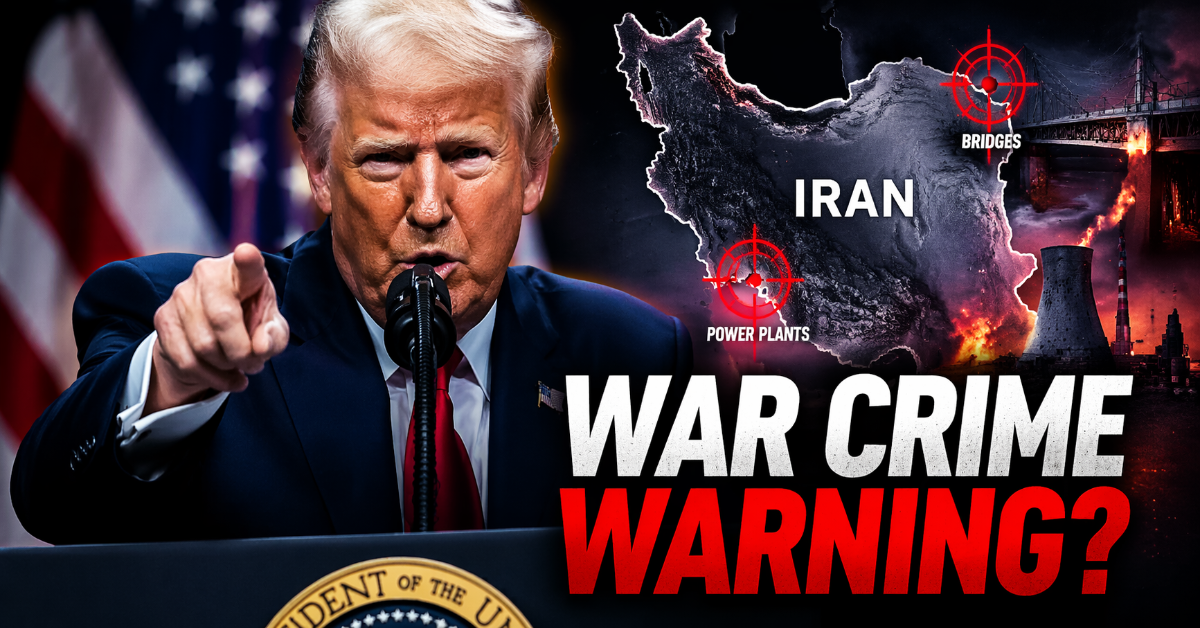
Trump has established a firm ultimatum: Iran must reopen the Strait of Hormuz—a vital maritime chokepoint responsible for approximately 20% of the world’s oil supply—by Tuesday evening. Failure to comply, Trump warned, could result in U.S. forces targeting:
- Energy Grids: Power plants essential for civilian life.
- Transportation Hubs: Bridges and infrastructure used by the general population.
While a closure of the Strait would undoubtedly trigger a global energy shock, legal experts argue that retaliating against civilian assets could violate the Rome Statute and the Geneva Conventions. The Trump Iran war threat is unique in that it explicitly names civilian infrastructure as a potential target, crossing a line many past administrations have avoided.
Disputed Data: The 60,000 Death Toll Claim
To justify his hardline stance, Trump cited the Iranian regime’s crackdown on internal protesters. However, his claim of 60,000 deaths in a single month has come under intense scrutiny:
| Source | Reported Death Toll |
| Donald Trump’s Claim | 60,000 |
| Independent Monitors | ~6,000 (Verified) |
| Iranian Officials | ~3,000 |
While the regime’s human rights record is widely condemned, the discrepancy between verified data and Trump’s figures has added a layer of volatility to the Trump Iran war threat. Critics argue that inflating casualty numbers could be a pretext for aggressive military action.
Global Backlash and Legal Warnings
The reaction to Trump’s “animals” comment—referring to Iranian leadership—and his infrastructure threats was immediate:
- Amnesty International: Classified the statements as a “threat to commit war crimes.”
- Senator Bernie Sanders: Called the rhetoric “dangerous and reckless.”
- Senator Chris Murphy: Raised concerns regarding leadership stability and the 25th Amendment.
- European Allies: Have urged extreme restraint, fearing a strike could collapse remaining non-proliferation monitoring.
The unified international condemnation suggests that the Trump Iran war threat is not being treated as standard political posturing, but as a potential breach of international law.
Diplomacy vs. Escalation: What Happens Next?
As the clock ticks toward the Tuesday 8 p.m. ET cutoff, backchannel mediators in Oman, Qatar, and Switzerland are working feverishly to de-escalate the situation. The central tension remains: is this high-stakes saber-rattling intended to force Iran’s hand, or a genuine preview of a new, aggressive military policy? With global energy markets in a state of “cautious volatility,” the world is bracing for whether this Trump Iran war threat remains a diplomatic bluff or transforms into a regional conflict.
Key Takeaways for the 2026 Political Landscape
As the 2026 election cycle intensifies, the Trump Iran war threat has become a defining partisan lightning rod. While some allies remain quiet, the international community is watching the U.S. closely, questioning the boundaries of modern conflict and the future of Middle Eastern stability. Whether the Tuesday deadline passes quietly or with force, the rhetoric has already reshaped the geopolitical landscape.