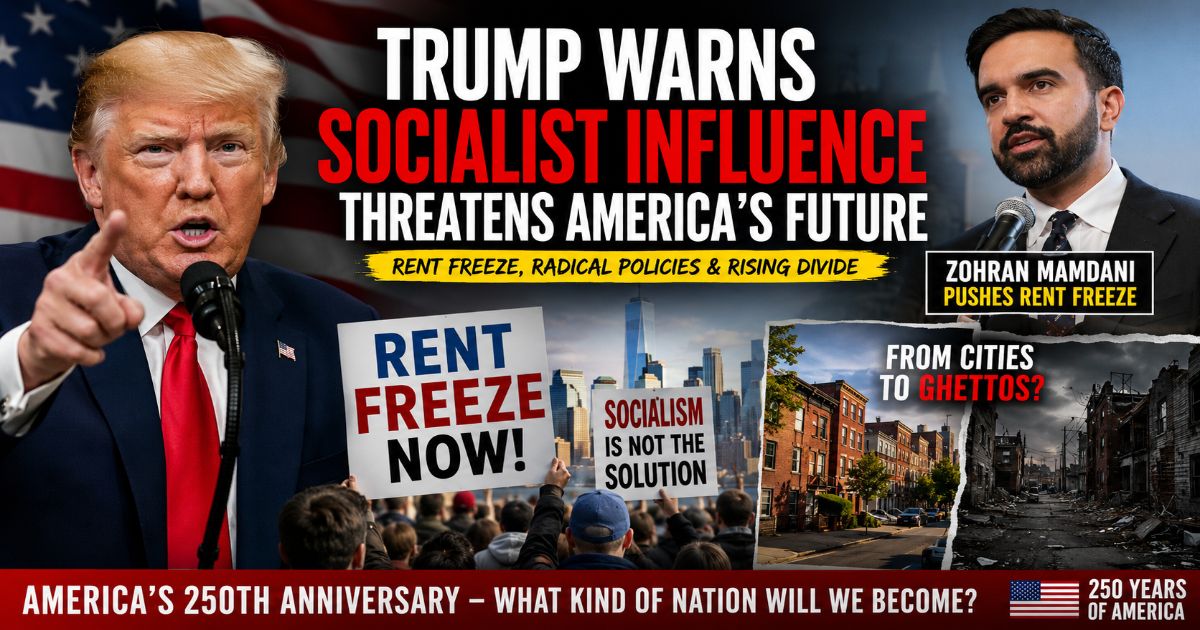
Trump Socialist Warning
Trump Warns Rising Socialist Influence Could Reshape America’s Future
As the United States approaches its historic 250th anniversary, the nation’s political landscape is becoming increasingly divided over the direction of the Democratic Party. President Donald Trump has issued one of his strongest warnings yet, arguing that the growing influence of socialist-backed candidates represents the most significant threat America has faced since its founding. His comments have sparked fresh debate across the country about economic policy, government intervention, and the future of American democracy.
Trump made the remarks while discussing recent Democratic primary victories by candidates aligned with New York City Mayor Zohran Mamdani, a progressive politician known for supporting policies such as rent freezes, expanded social programs, and stronger government involvement in housing. According to Trump, these proposals move the country away from the free-market principles that have helped shape the United States for nearly two and a half centuries.
The president argued that policies like rent freezes may appear attractive to struggling renters in the short term but could create long-term economic problems. He claimed that limiting rental prices discourages property owners from maintaining buildings, reduces private investment, and slows the construction of new housing. Trump warned that these effects could eventually lead to declining neighborhoods, deteriorating infrastructure, and fewer housing options for residents.
One of Trump’s most widely discussed statements focused on New York City’s housing proposals. He suggested that implementing strict rent controls would transform cities into “ghettos and slums” by discouraging development and driving businesses, landlords, and middle-class families away. His comments immediately generated strong reactions from supporters and critics alike, highlighting the sharp divide over how America should address its growing housing affordability crisis.
Housing affordability has become one of the defining political issues in major American cities. Rising rents, limited housing supply, and increasing living costs have placed significant financial pressure on millions of families. Progressive leaders argue that government intervention is necessary to protect tenants from rapidly increasing housing costs and displacement. Conservatives, including Trump, believe expanding housing supply through private investment and reducing regulations offers a more sustainable solution.
Zohran Mamdani has emerged as one of the Democratic Party’s most recognizable progressive voices. His campaign has emphasized affordable housing, expanded public services, higher taxes on wealthy individuals, and stronger labor protections. Supporters argue that these policies directly address growing income inequality and the rising cost of living experienced by many Americans. Critics, however, contend that increased government spending and regulation could slow economic growth and discourage investment.
The recent Democratic primary elections have intensified national attention on the party’s progressive wing. Several candidates endorsed by Mamdani secured primary victories, signaling growing grassroots support for policies traditionally associated with democratic socialism. Political analysts believe these results could influence future Democratic platforms as the party prepares for upcoming national elections.
Trump described these election outcomes as evidence of a broader ideological shift within the Democratic Party. He argued that moderate voices are gradually losing influence while progressive candidates gain momentum among younger voters and urban communities. According to Trump, this transformation represents a fundamental challenge to America’s economic system and constitutional principles.
Supporters of Trump’s position believe free-market capitalism has created innovation, entrepreneurship, and long-term prosperity throughout American history. They argue that reducing government intervention encourages business growth, job creation, and economic opportunity. From this perspective, expanding socialist-inspired policies could weaken incentives for investment, reduce productivity, and increase dependence on government programs.
Progressive Democrats strongly reject those criticisms. They argue that policies supporting affordable housing, universal healthcare, stronger labor protections, and expanded public services are designed to create greater economic fairness rather than replace capitalism. Many progressive leaders emphasize that democratic socialism in the United States differs significantly from traditional state-controlled economies and instead focuses on expanding access to essential services while maintaining democratic institutions.
The debate surrounding rent freezes illustrates the broader philosophical divide between conservatives and progressives. Supporters of rent control argue that government intervention is necessary during periods of rapidly rising housing costs to prevent displacement and homelessness. Critics counter that limiting rental prices discourages developers from building new housing, ultimately worsening supply shortages and increasing long-term affordability challenges.
Economic experts remain divided over the effectiveness of rent control policies. Some studies suggest temporary rent stabilization can provide immediate financial relief for tenants facing sharp rent increases. Other research indicates that strict rent controls may reduce new housing construction, limit housing availability, and encourage property owners to convert rental units into alternative uses. The effectiveness of these policies often depends on local market conditions and the specific design of housing regulations.
Beyond housing, Trump’s broader criticism reflects growing concern among conservatives about expanding government involvement in healthcare, education, taxation, and labor markets. Republican leaders generally argue that reducing taxes, lowering regulations, and encouraging private-sector growth remain the most effective strategies for improving living standards and creating economic opportunity.
Meanwhile, progressive Democrats believe current economic challenges require stronger public investment and more active government policies. Rising healthcare costs, student debt, housing affordability, and income inequality have become central issues motivating many younger voters to support progressive candidates advocating structural reforms.
Political observers note that America’s ideological divisions have become increasingly visible in recent election cycles. Urban and rural communities often prioritize different policy solutions, while younger and older generations frequently express contrasting views regarding the appropriate role of government. These differences are likely to shape campaign strategies leading into future national elections.
As the United States prepares to celebrate 250 years since the Declaration of Independence, political leaders from both major parties are presenting competing visions for the nation’s future. Conservatives emphasize preserving free-market capitalism, limited government, and individual responsibility. Progressives advocate expanding social programs, increasing public investment, and strengthening economic protections for working families.
Trump’s warning that socialist-backed candidates pose a historic threat has intensified national discussion about America’s political identity. His remarks have energized many Republican supporters while drawing criticism from Democrats who argue that such rhetoric exaggerates policy differences and contributes to political polarization.
Ultimately, the debate surrounding progressive policies, rent freezes, and the future direction of the Democratic Party reflects larger questions about how the United States should balance economic freedom, social responsibility, and government involvement. As voters continue evaluating competing visions, issues such as housing affordability, economic inequality, and public investment will remain central topics shaping America’s political future.
With national elections approaching and ideological debates becoming increasingly prominent, both Republicans and Democrats are expected to continue making their case to voters. Whether Americans choose expanded government programs or market-based reforms, the decisions made in the coming years could significantly influence the country’s economic and political direction as it enters its next chapter of history.