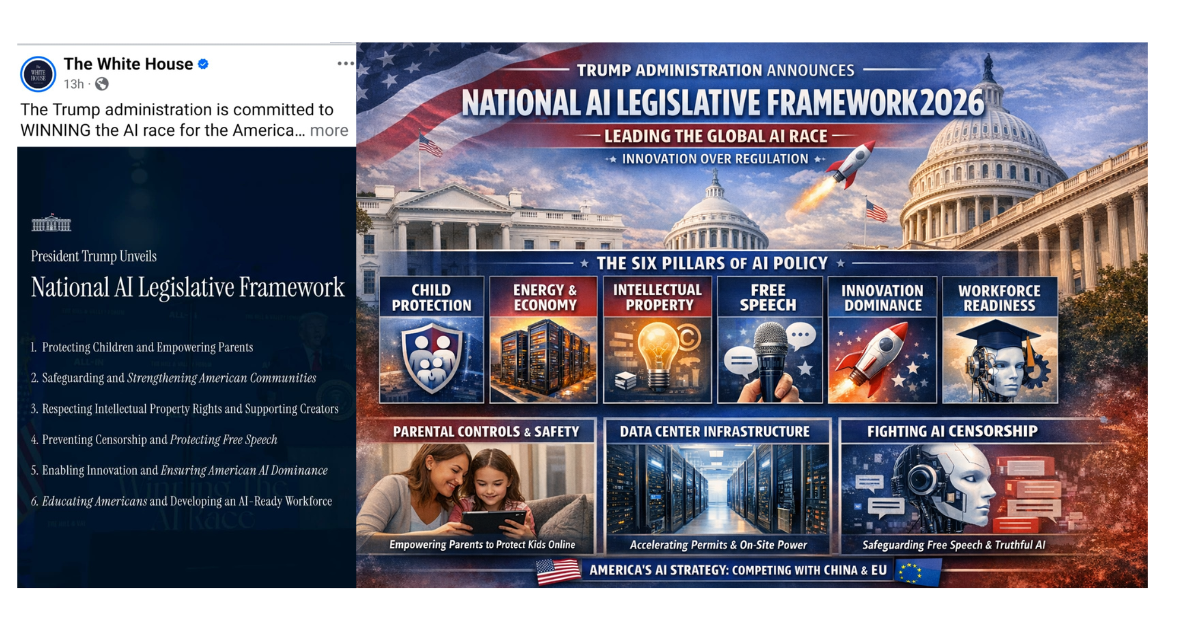
America’s Bold AI Strategy
The Trump Administration has officially released its National AI Legislative Framework (2026)—a major move aimed at making the United States the undisputed global leader in artificial intelligence.
Table of Contents
ToggleUnlike heavy regulation seen in other regions, this policy follows a “light-touch” approach, focusing on:
- Faster innovation
- Economic growth
- National security
- Public trust
At its core, this framework is about winning the global AI race while addressing real concerns like child safety, free speech, and energy usage
The Vision: Winning the Global AI Race
The administration views AI as an “interstate technology”, meaning it cannot function effectively under different state laws.
The big goal:
Create one national AI policy instead of 50 different state rules.
Why this matters:
- Eliminates confusion for tech companies
- Speeds up innovation
- Keeps the U.S. competitive globally
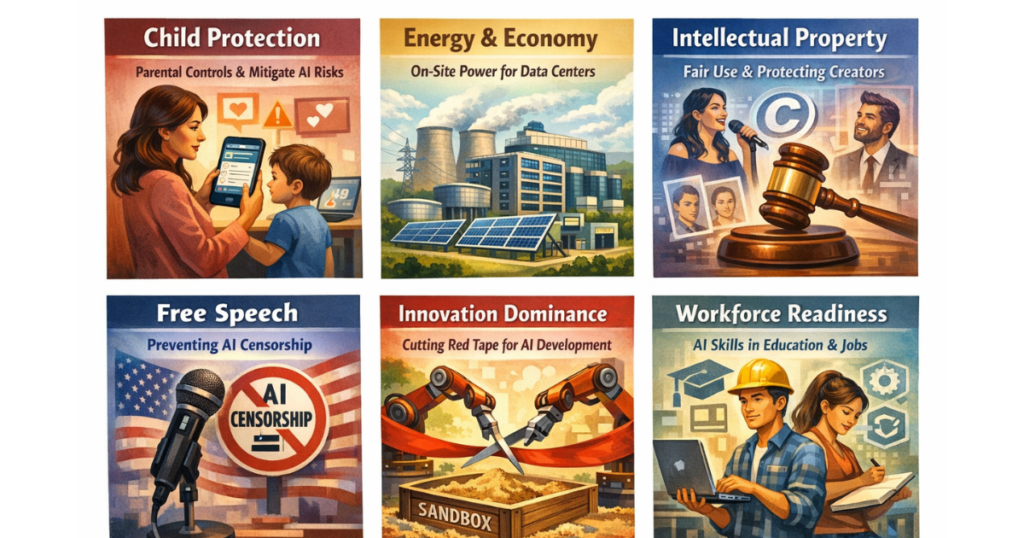
The 6 Pillars of Trump AI Framework 2026
1. 👨👩👧 Child Protection & Parental Control
This policy puts parents in control of children’s digital experiences.
Key features:
- Age verification systems
- Parental control tools
- Protection from harmful AI content
2. ⚡ Energy & Economic Growth
AI requires massive computing power—and energy.
The plan includes:
- Faster approval for data centers
- On-site power generation
- Reducing electricity burden on citizens
3. 🎨 Intellectual Property Protection
Balancing innovation and creator rights is a priority.
The framework supports:
- Fair use for AI training
- Protection from voice/likeness misuse
- Safeguards for artists and creators
4. 🗣️ Free Speech Protection
A major highlight of the policy is anti-censorship.
The framework ensures:
- No suppression of political opinions
- Protection of First Amendment rights
- AI systems focused on truth and accuracy
5. ⚙️ Innovation & AI Dominance
To stay ahead globally, the U.S. plans to:
- Remove outdated regulations
- Expand AI testing environments
- Encourage rapid AI adoption
6. 🎓 Workforce Development
The future workforce must adapt to AI.
Key initiatives:
- AI skill training programs
- Integration into education systems
- New job opportunities